


 Eng
Eng 
 عربى
عربى

Thin or Thick Cutting Discs: Which Fits Metal Work
 2026.09.11
 Industry News
Cutting disc thickness affects kerf width, material removal, cutting feel, and disc durability. A thin disc can move through sheet metal with relatively little material loss, while a thicker wheel provides a more substantial abrasive structure for demanding work. These differences make disc thickness an important specification across metal cutting discs for grinder applications.
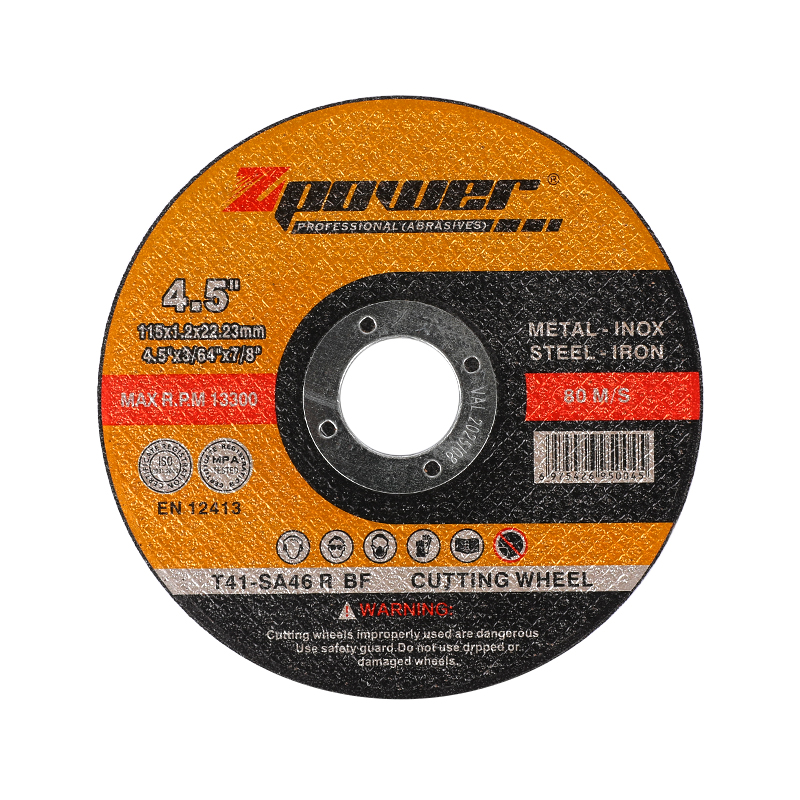
Common angle-grinder cutting discs range from ultra-thin designs around 0.8–1.0 mm to heavier versions around 2.5–3.2 mm. Diameter, abrasive grain, reinforcement, and maximum operating speed still need to match the grinder and intended application. Bosch products, for example, list 115 mm and 125 mm discs with 22.23 mm bores in both 1.6 mm and 2.5 mm configurations.
Ultra-Thin Discs: Clean Cuts with Less Kerf
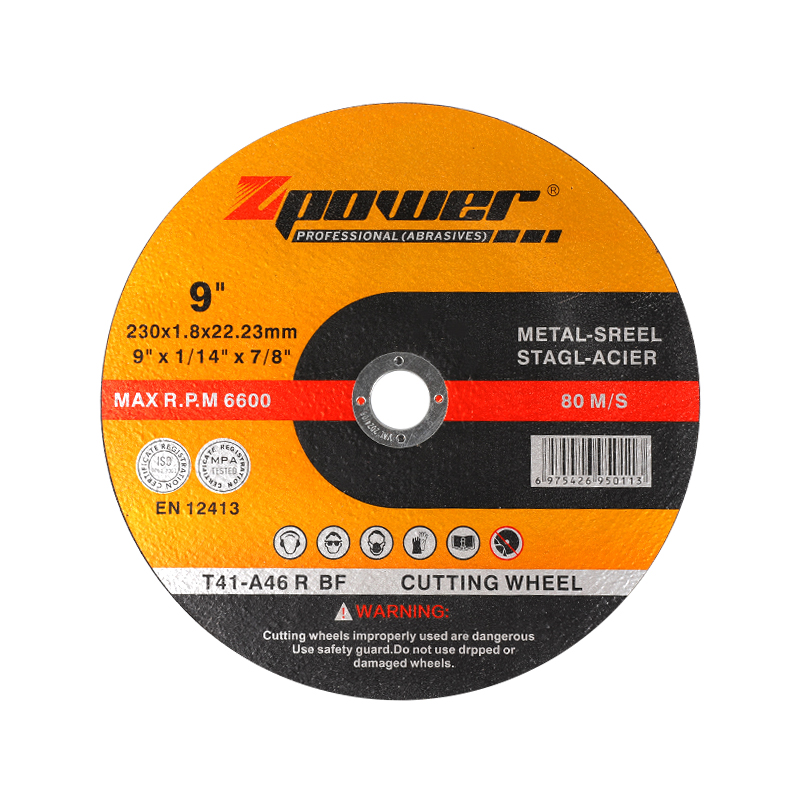
Thin cutting discs are designed around controlled material removal. Their narrow cutting edge reduces the width of the cut, which can be useful on thin sheet, small tubes, brackets, and precision fabrication work.
- 0.8–1.0 mm: Suitable for thin sheet, light tubing, and stainless-steel sections.
- 1.0–1.2 mm: Useful for general light-duty metal cutting with a relatively narrow kerf.
- Fine-grit formulations: Commonly used where a controlled cutting action is preferred.
Norton lists 1.0 mm straight cutting discs for steel and stainless steel, with an operating speed of up to 80 m/s in specified products. Its product information describes the thinner format as providing fast and comfortable cutting.
Where Thin Discs Make Sense
Thin discs are particularly useful on applications where excessive material removal is undesirable. Sheet-metal fabrication, automotive body work, stainless-steel tubing, and small structural components can benefit from a narrow kerf.
Less abrasive material needs to pass through the workpiece, so the cutting edge can feel more responsive. A suitable reinforced design also helps maintain disc stability during straight cutting.
Medium Thickness: A Practical Middle Ground
Discs around 1.6–1.9 mm occupy a useful position between ultra-thin cutting and heavy-duty wheel construction. They provide more disc body than a 1.0 mm product while retaining a relatively narrow cutting profile.
- 1.6 mm: Suitable for steel profiles, pipes, tubes, and general workshop cutting.
- 1.9 mm: Useful for applications requiring additional disc robustness.
- 115–125 mm diameter: Common sizes for portable angle grinders.
Norton describes 1.6 mm and 1.9 mm versions as offering longer life than its thinner 1.0 mm products, while 2.5 mm versions are positioned toward heavier use.
Thicker Discs for Heavier Metal Sections
Thicker cutting discs provide a more substantial abrasive body and are commonly associated with heavier cutting applications. Sections such as thick-wall tubing, steel bars, larger profiles, and demanding fabrication jobs may require a sturdier wheel format.
- 2.5 mm: Suitable for heavier cutting work and applications where disc robustness matters.
- 3.0–3.2 mm: Used across certain heavy-duty metal cutting products.
- Coarser abrasive grades: Often paired with thicker construction for substantial material removal.
Bosch offers 2.5 mm cutting discs for 115 mm and 125 mm grinders, while other product ranges extend to 3.0 mm and thicker formats. Norton also identifies 2.5 mm discs as suitable for heavier use.
Steel, Stainless Steel, and Aluminum Need Different Disc Designs
Thickness alone does not determine cutting behavior. Abrasive composition and bond formulation can change how the disc performs on different metals.
- Carbon steel: Aluminum oxide and zirconia-based products are widely used across light and heavy cutting.
- Stainless steel: INOX-rated discs can help avoid unwanted contamination; iron-free formulations are available for stainless applications.
- Aluminum: Specialized bonds can reduce loading and overheating during cutting. Norton lists dedicated aluminum discs with a 0.045-inch thickness.
Disc Thickness Is Only Part of the Specification
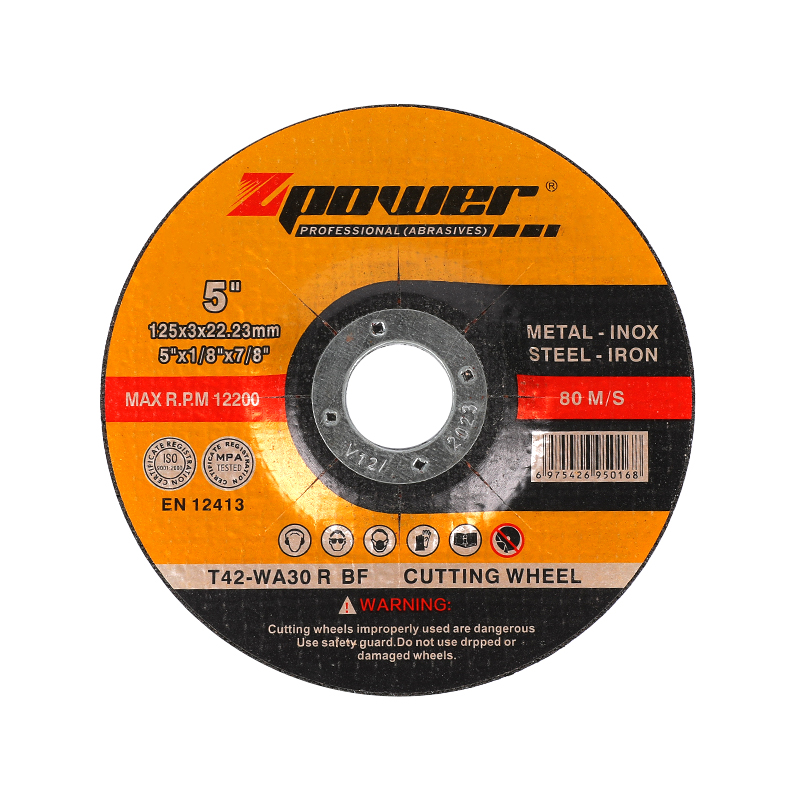
Diameter, bore size, disc type, abrasive grade, reinforcement, and maximum speed should be checked alongside thickness. A 125 × 22.23 × 1.0 mm disc and a 125 × 22.23 × 2.5 mm disc may fit the same grinder, yet their intended applications can differ considerably.
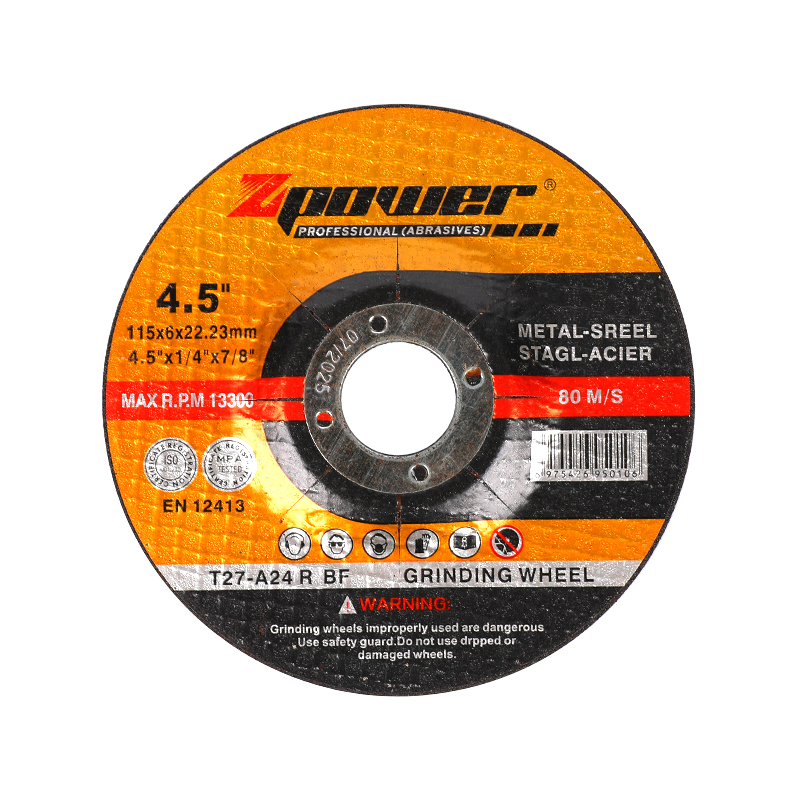
Type 41 or Type 01 flat cutting wheels are commonly designed for straight cutting, while other wheel profiles are built for different grinder applications. Product specifications should always match the machine's permitted accessories and operating speed. Bosch lists a maximum circumferential speed of 80 m/s for specified metal cutting discs.
Which Thickness Fits the Job?
Thin discs suit precision-oriented cutting of lighter metal sections, particularly sheet and small tubing. Medium-thickness versions provide a useful balance for general workshop fabrication. Thicker discs have a stronger presence in heavier cutting work involving substantial steel sections.
- Thin sheet and small tubes: Consider 0.8–1.2 mm formats.
- General steel fabrication: 1.6–1.9 mm discs offer a balanced option.
- Heavy sections: 2.5 mm or thicker designs may provide greater suitability.
- Stainless fabrication: Check for INOX or iron-free specifications.
Choosing among metal cutting discs for grinder products becomes easier once disc thickness is considered together with workpiece size, metal type, cutting precision, and machine specifications. Thin does not simply mean better, while thick does not automatically suit every heavy job. The useful match comes from connecting disc construction with the actual metal section being cut.

Quick Links
 Home
Home
About us
 +86-13967457388/ +86-0579-87320615
 No. 49, Weitai Road, Phase II, Zhiying, Yongkang, Jinhua City, Zhejiang, China
Copyright © 2024. YONGKANG ZHENGBO ABRASIVES CO., LTD. All rights reserved.
Aluminum Grinder Blade Factory
