


 Eng

 عربى

 Home / News / Industry News / Abrasive Disc Selection: Which Specifications Matter for Industrial Applications
Abrasive Disc Selection: Which Specifications Matter for Industrial Applications
 2026.11.06
 Industry News
Industrial grinding operations involve different materials, surface conditions, and production requirements. A disc used for removing weld seams may not deliver the same results as one intended for surface finishing, edge preparation, or heavy material removal. Purchasing teams therefore need to evaluate abrasive specifications alongside machine compatibility, operating conditions, and workplace safety requirements.
At Zhengbo, we understand that industrial buyers need more than a product catalogue to make purchasing decisions. They require clear technical information, consistent specifications, and reliable communication with their manufacturing partner. Our approach to abrasive angle grinder discs focuses on helping distributors, wholesalers, and industrial users identify suitable product configurations for their intended applications.
Several technical details deserve attention before placing an order. Abrasive material, grit size, disc dimensions, operating speed, and bonding structure all influence how a disc performs during grinding operations.
1. Identify the Grinding Material Before Confirming Disc Specifications
The workpiece material determines the abrasive characteristics required for a particular operation. Different metals have different hardness levels, surface properties, and heat responses. A disc suitable for carbon steel may not provide the same grinding results on stainless steel or non-ferrous metals.
Industrial procurement teams should communicate the actual material grades and processing conditions rather than relying on general descriptions such as metal grinding.
Common Material Considerations
- Carbon steel: Grinding applications involving steel structures, fabricated components, and welded assemblies often require abrasive products designed for material removal and weld preparation.
- Stainless steel: Stainless steel processing requires attention to heat generation, surface contamination, and abrasive compatibility. Dedicated stainless steel grinding products can help maintain the required surface condition.
- Cast iron: Foundry operations and machinery component processing may involve irregular surfaces, burr removal, and localized grinding requirements.
- Aluminum and other non-ferrous metals: These materials can create loading problems during grinding. Abrasive products should have specifications suitable for the workpiece to reduce clogging and maintain stable operation.
At Zhengbo, we recommend that buyers provide material information together with the intended grinding process. This allows our team to discuss abrasive composition and product configuration based on actual operating conditions instead of making assumptions from the material category alone.
2. Abrasive Grain Type Influences Grinding Performance
Abrasive grains perform the actual material removal. Their hardness, toughness, and fracture characteristics affect cutting behavior, surface results, and disc service life. Different grain compositions are developed for different grinding requirements.
Common Abrasive Materials
- Aluminum oxide: A widely used abrasive for general steel grinding, weld cleaning, and fabrication work. Its application range makes it relevant to many industrial metalworking processes.
- Zirconia alumina: Zirconia-based abrasive grains are commonly used in demanding metalworking applications. Their fracture characteristics support continued abrasive action under suitable grinding pressure.
- Silicon carbide: This abrasive has high hardness and is commonly associated with grinding applications involving non-ferrous metals, stone, ceramics, and certain hard materials.
- Ceramic alumina: Ceramic abrasive grains are used in demanding industrial grinding processes where controlled grain fracture and sustained cutting action are important considerations.
Grain composition should be evaluated alongside the workpiece material, grinding pressure, machine power, and required surface condition. A higher-priced abrasive does not automatically provide better economic results for every application. Buyers should compare actual grinding requirements and operating costs before confirming a specification.
3. Grit Size Determines the Balance Between Material Removal and Surface Finish
Grit size is another important purchasing specification. It indicates the relative size of the abrasive particles and influences the surface produced during grinding.
Coarser abrasive grains generally remove material more aggressively, while finer grains are commonly associated with smoother surface preparation. The appropriate grade depends on the amount of material that needs to be removed and the finish required by the next production stage.
Typical Grit Selection Considerations
| Grit Range | Common Application Direction | Procurement Consideration |
| Coarse grades | Heavy stock removal, weld seam grinding, rough surface treatment | Consider removal rate and workpiece condition |
| Medium grades | General metal grinding, edge preparation, fabrication work | Balance material removal and surface quality |
| Fine grades | Surface refinement and preparation before subsequent finishing | Check the required surface condition |
Exact grit classifications and available grades depend on the abrasive product type and applicable grading system. Buyers should confirm the manufacturer's specification rather than assuming that identical grit numbers always provide identical grinding behavior across different abrasive materials.
For production environments involving multiple processing stages, purchasing teams may also consider maintaining separate abrasive grades for rough grinding and finishing. This arrangement helps operators use suitable consumables for each stage and makes inventory planning easier.
4. Disc Diameter, Thickness, and Bore Must Match the Equipment
Dimensional compatibility is essential for safe and stable grinding operations. A disc may have suitable abrasive properties but still be unsuitable for a particular angle grinder because its mounting dimensions or operating limits do not match the equipment.
Key Dimensional Parameters
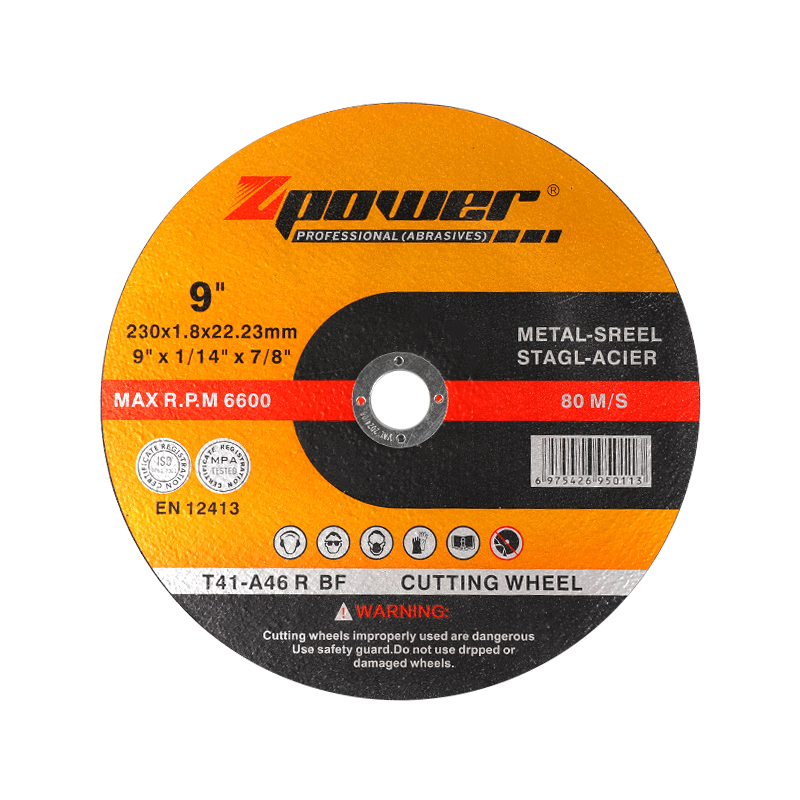
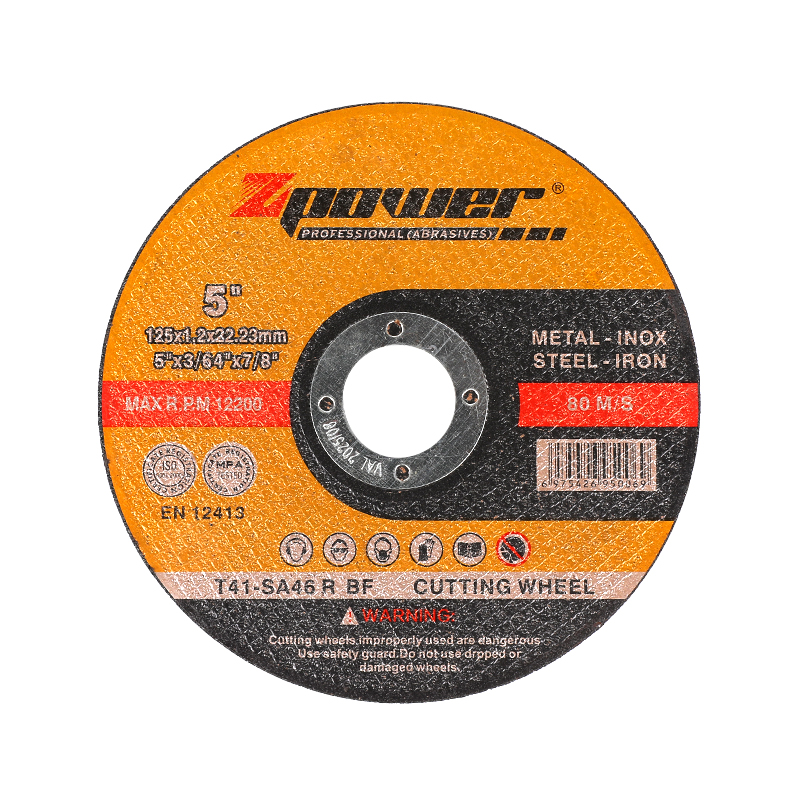
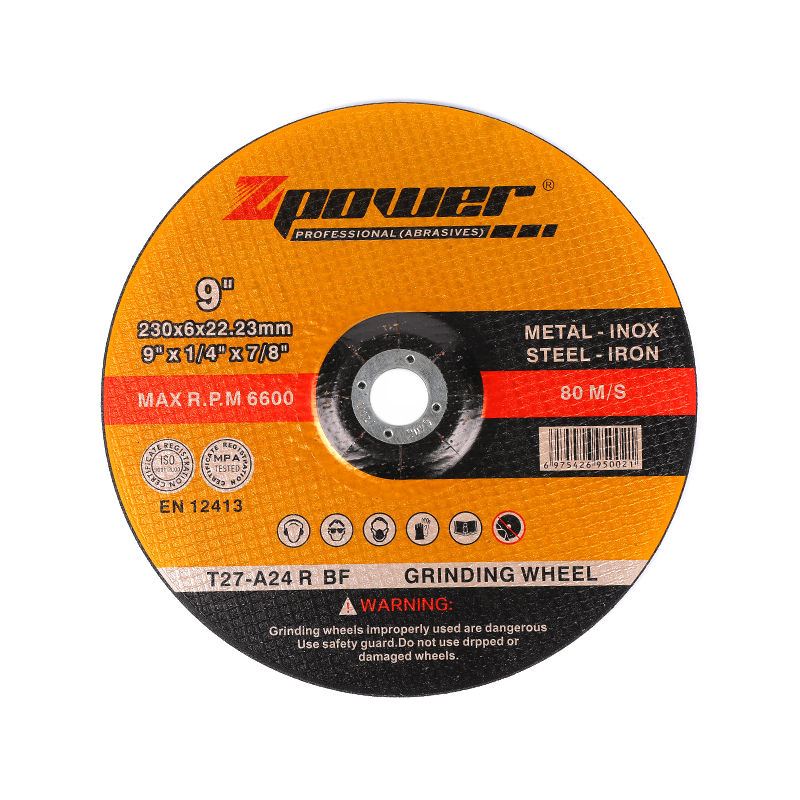
- Outer diameter: Common angle grinder disc diameters include 100 mm, 115 mm, 125 mm, 150 mm, 180 mm, and 230 mm. The machine manufacturer's instructions determine the permitted disc diameter.
- Disc thickness: Thickness affects the product structure and intended operation. Grinding wheels and cutting-off wheels have different design requirements and should not be treated as interchangeable products.
- Bore diameter: The center opening must match the machine spindle or approved mounting arrangement. Common bore dimensions include 16 mm, 22.23 mm, and other application-specific sizes.
- Disc shape: Flat and depressed-center designs serve different operating configurations. Buyers should verify the permitted contact surface and machine guard arrangement.
For example, a 115 mm grinding disc is commonly associated with compact angle grinders. However, diameter alone does not establish compatibility. The bore, thickness, maximum rotational speed, and product type must also be checked against the equipment specifications.
At Zhengbo, we encourage customers to provide their target dimensions and machine information during product inquiries. Clear dimensional requirements help reduce specification misunderstandings during sample confirmation and bulk purchasing.
5. Maximum Operating Speed Is a Critical Safety Specification
Rotational speed directly affects the mechanical stress experienced by an abrasive disc. Every product must be used within its marked maximum operating speed and within the limitations of the grinding machine.
Manufacturers commonly provide maximum rotational speed in revolutions per minute (RPM) and maximum peripheral speed in meters per second (m/s). Both values help identify the permitted operating conditions.
Understanding the Relationship Between RPM and Disc Diameter
Peripheral speed can be calculated using the following formula:
V = π × D × N / 60,000
- V: Peripheral speed in meters per second (m/s).
- D: Disc diameter in millimeters (mm).
- N: Rotational speed in revolutions per minute (RPM).
For illustration, a 115 mm disc operating at 13,300 RPM has a peripheral speed of approximately 80 m/s. This calculation is useful for understanding the relationship between disc diameter and rotational speed, but the actual permitted speed must always follow the marking on the abrasive product.
Procurement teams should verify the following details:
- Maximum RPM marked on the disc.
- Maximum peripheral speed in m/s.
- Rated speed of the intended angle grinder.
- Machine guard and mounting requirements.
- Application restrictions stated by the manufacturer.
At Zhengbo, we regard speed compatibility as an essential part of product specification confirmation. Buyers should never use an abrasive disc at a machine speed exceeding its marked operating limit.
6. Bonding Structure and Disc Construction Affect Durability
Bonding materials hold abrasive grains together and influence the structural characteristics of bonded grinding wheels. Resin-bonded products are widely used in portable grinding applications because their construction can accommodate different grinding requirements.
The bond formulation, abrasive concentration, reinforcement, and manufacturing process all contribute to the final product characteristics.
Important Construction Details
- Resin bond: Resin-based bonding systems are commonly used in reinforced grinding and cutting products. Their formulation needs to correspond with the intended application and operating conditions.
- Reinforcement layers: Fiberglass reinforcement is used in applicable bonded abrasive products to provide structural support under operating loads.
- Product density and hardness: These characteristics influence grinding behavior and should be evaluated according to the intended material and operation.
- Manufacturing consistency: Controlled mixing, forming, curing, and inspection procedures help maintain consistency across production batches.
Buyers should discuss construction requirements with the manufacturer rather than evaluating a grinding wheel solely by its external appearance. Similar-looking products can have different internal structures and operating characteristics.
7. Safety Standards and Product Traceability Should Be Part of Procurement
Industrial abrasive purchasing involves more than dimensional and performance requirements. Product documentation, safety markings, and manufacturing traceability are also important considerations, particularly for importers and distributors supplying regulated markets.
Several standards are relevant to different abrasive product categories:
- EN 12413: Covers safety requirements for bonded abrasive products, including applicable reinforced resin-bonded grinding and cutting wheels.
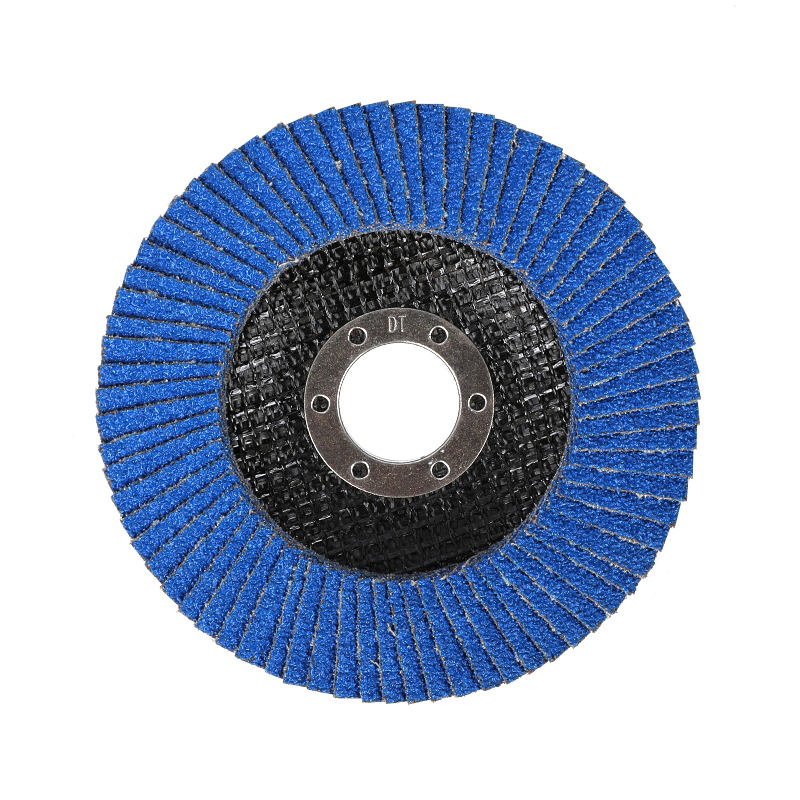
- EN 13743: Addresses specific coated abrasive products, including applicable flap discs and fibre discs.
- ISO 525: Provides a classification framework for bonded abrasive products, including their shapes and dimensions.
Depending on the product category and destination market, buyers should request relevant technical documentation and verify the applicable conformity requirements.
Product markings may include:
- Manufacturer or registered trademark information.
- Disc dimensions and product identification.
- Maximum operating speed and rotational frequency.
- Application restrictions and safety pictograms.
- Applicable conformity information and traceability codes.
Proper storage and handling also deserve attention. Abrasive products should be protected from moisture, impact, and other conditions that may affect their integrity. Operators should inspect discs before use, follow the equipment instructions, and wear appropriate personal protective equipment.
8. What Should Industrial Buyers Include in an Abrasive Disc Inquiry?
A detailed purchasing inquiry helps manufacturers understand the actual requirements and provide more relevant product information. General requests such as grinding discs for metal may leave too many technical details unresolved.
At Zhengbo, we suggest that distributors, importers, and industrial purchasing departments prepare the following information before requesting a quotation or sample:
- Application: Weld grinding, surface preparation, deburring, edge treatment, or general metal grinding.
- Workpiece material: Carbon steel, stainless steel, cast iron, aluminum, or another specified material.
- Product dimensions: Outer diameter, thickness, and bore diameter.
- Abrasive specification: Grain material, grit grade, and bond requirements where applicable.
- Machine information: Grinder model, rated RPM, mounting arrangement, and permitted disc size.
- Market requirements: Applicable safety standards, labeling language, packaging information, and documentation.
- Order requirements: Estimated purchasing volume, packaging configuration, and expected delivery arrangements.
These details give our team a clearer understanding of the purchasing project. They also help us discuss technical feasibility, product configuration, sample evaluation, and production arrangements before an order is confirmed.
Build a Purchasing Specification Around the Actual Grinding Process
Industrial abrasive disc procurement requires coordination between material requirements, grinding objectives, machine compatibility, and product safety. Diameter and grit size are useful starting points, but they cannot independently determine whether a disc is suitable for a particular production environment.
At Zhengbo, we focus on communicating these technical details with our customers throughout the product inquiry and specification confirmation process. Our goal is to help distributors, wholesalers, and industrial users establish clear purchasing requirements and reduce avoidable specification discrepancies.
Whether your business requires general metal grinding products or customized abrasive configurations, providing detailed application and equipment information is a practical way to begin. Contact Zhengbo through cuttingdiscfactory.com to discuss your abrasive disc requirements, technical specifications, and manufacturing cooperation opportunities.

Quick Links
 Home
About us
 +86-13967457388/ +86-0579-87320615

 No. 49, Weitai Road, Phase II, Zhiying, Yongkang, Jinhua City, Zhejiang, China

Copyright © 2024. YONGKANG ZHENGBO ABRASIVES CO., LTD. All rights reserved.
Aluminum Grinder Blade Factory
