


 Eng
Eng 
 عربى
عربى

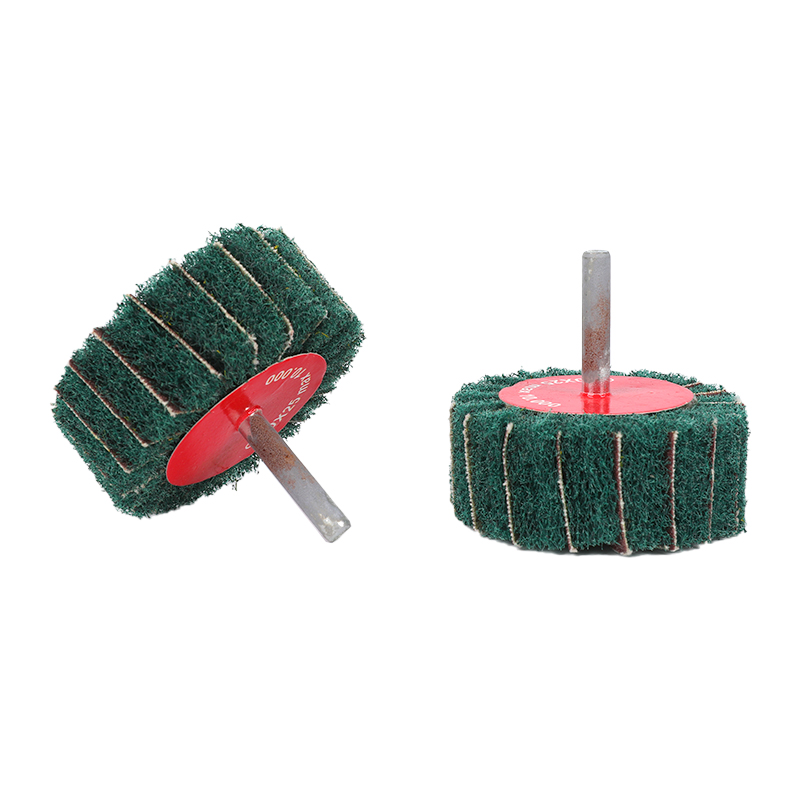
Non Woven Abrasive Wheel with Shank
Non-woven abrasive wheels with shanks are versatile tools designed for a variety of surface finishing and polishing applications across industries. These wheels combine the flexibility and conformability of nonwoven abrasives with the convenience of a shank, making them ideal for tasks that require precision and control.
1. Composition and Structure
Non-woven abrasive wheels with shanks are typically composed of multiple layers of nonwoven material, such as nylon fibers impregnated with abrasive grains and synthetic resins. The layers are bonded together to form a durable and resilient wheel structure. The shank, often made of metal or reinforced plastic, is securely attached to the wheel, providing a stable connection to rotary tools like drills and die grinders.
2. Versatility in Applications
These wheels are widely used in metalworking, woodworking, automotive, and maintenance industries for tasks ranging from deburring and cleaning to blending and polishing surfaces. Their flexibility allows them to conform to irregular shapes and contours, making them suitable for intricate workpieces and hard-to-reach areas.
3. Key Features
Abrasive Grits: Available in various grit sizes, from coarse to fine, to accommodate different surface finishing requirements.
Conformability: The non-woven structure allows the wheel to conform to the workpiece, reducing the risk of gouging or damaging delicate surfaces.
Cool Operation: They operate at lower temperatures compared to traditional grinding wheels, reducing heat buildup and reducing the risk of thermal damage to the workpiece.
Longevity: Designed for durability, these wheels offer extended service life, reducing downtime for replacements.
4. Applications in Detail
Deburring: Effective in removing sharp edges and burrs from metal, plastic, and composite materials.
Cleaning: Used for surface preparation before painting, welding, or coating applications.
Finishing: Achieves smooth and uniform finishes on metals and alloys, enhancing aesthetic appeal.
Light Grinding: Suitable for light material removal and shaping tasks.
5. Advantages Over Traditional Abrasives
Non-Clogging: The open structure of non-woven wheels prevents the buildup of swarf and debris, maintaining consistent performance.
Safety: Reduced vibration and noise levels compared to conventional grinding wheels improve operator comfort and safety.
Environmentally Friendly: They produce fewer airborne particles and dust, promoting a cleaner working environment.
6. Selection Considerations
When choosing a non-woven abrasive wheel with a shank, factors such as grit size, wheel diameter, and shank size compatibility with your tools should be considered. Additionally, understanding the specific application requirements, such as material type and desired surface finish, helps in selecting the suitable wheel.
7. Maintenance and Storage
To maximize the lifespan of these wheels, proper storage in a dry and cool environment is recommended. Regular inspection for wear and tear, and cleaning of the wheels after use, ensure consistent performance and longevity.
8. Industry Applications
Metalworking: Used in fabrication shops for deburring and finishing metal components.
Woodworking: Ideal for sanding and polishing wooden surfaces without causing damage.
Automotive: Commonly employed in body shops for prepping surfaces before painting or refinishing.
Non-woven abrasive wheels with shanks are indispensable tools in modern industrial and DIY applications due to their versatility, durability, and ease of use. Whether for precision finishing or aggressive material removal, these wheels offer a reliable solution while ensuring less surface damage and good performance. Understanding their capabilities and selecting the right wheel for each task is key to achieving results in surface preparation and finishing operations.

Specifications
|
Material |
Scouring Pad |
|
Color |
Green/Red |
|
Size |
25*25*6mm, 30*25*6mm, 40*25*6mm, 50*25*6mm, 60*25*6mm, 80*40*6mm, 100*50*6mm |
KEEP IN TOUCH
About Us

YONGKANG ZHENGBO ABRASIVES CO., LTD.
YONGKANG ZHENGBO ABRASIVES CO., LTD. is located in Yongkang, the hardware capital of China. It specializes in developing, producing, selling, and servicing wholesale Non Woven Abrasive Wheel with Shank exporter and Non Woven Abrasive Wheel with Shank supplier. It also operates flat abrasive cloth wheels, special fiber wheels, and steel wires: wheels and other abrasive products.
Established in 1995, the company has an annual output of more than 50 million grinding wheels. The company has a construction area of 12,000 square meters, more than 70 employees, and 10 R&D technicians. In the ups and downs of more than 20
years, step-by-step, down-to-earth, temper ourselves, develop and learn advanced production technology, improve the internal management system, keep pace with the times, and constantly seek to improve and improve product quality. Modern management, advanced
production technology, strict internal quality control, and timely after-sales service enable the company to respond to market changes, and customer demand, and provide the right products according to market and customer requirements. With a goal of 100 years of enterprise, Zhengbo is committed to technical research, product quality improvement, advanced production equipment updates, and the development of
suitable, cost-effective new products for market demand, we put more promotion funds into product research and development, to better quality and better service to the majority of users.
l am attentive, you can rest assured! Zhengbo Company adheres to the quality policy of “safe and efficient, quality and quantity, development and innovation, customer reassurance”, and establishes the concept of“realizing value for customers, development of customers is the development of enterprises", with“stable, honest, honest, and versatile”. "innovation, enterprising" is the spirit of enterprise, and constantly provides customers with reliable and valuable products. Provide OEM, ODM production, and OEM.
News
-
Rust, weld residue, and old paint can appear on the same steel component, yet these contaminants do not respond to abrasives in exactly the same way. Rust may require aggressive surface cleaning, weld...
READ MORE -
Grinding wheels and sanding discs may both work with angle grinders, yet their construction and working behavior are quite different. A bonded grinding wheel uses abrasive grains held together through...
READ MORE -
Cutting disc thickness affects kerf width, material removal, cutting feel, and disc durability. A thin disc can move through sheet metal with relatively little material loss, while a thicker wheel pro...
READ MORE -
Metal surfaces can vary greatly in hardness, ductility, heat sensitivity, and finishing requirements. Carbon steel may require aggressive stock removal, while stainless steel needs better heat control...
READ MORE

Quick Links
 Home
Home
About us
 +86-13967457388/ +86-0579-87320615
 No. 49, Weitai Road, Phase II, Zhiying, Yongkang, Jinhua City, Zhejiang, China
Copyright © 2024. YONGKANG ZHENGBO ABRASIVES CO., LTD. All rights reserved.
Aluminum Grinder Blade Factory
