


 Eng
Eng 
 عربى
عربى

Steel Wire Wheels: Cleaning, Deburring, or Surface Finishing
 2026.10.02
 Industry News
Steel wire wheels work differently from conventional abrasive discs. Rather than grinding the surface with abrasive grains, wire bristles scrape away rust, scale, paint residue, weld spatter, and other contaminants. This makes a steel wire grinding wheel useful across several stages of metal preparation, although the brush construction needs to match the task.
Crimped wire, knotted wire, wire diameter, wheel width, and operating speed all influence the contact behavior. A wheel designed for light surface cleaning may behave very differently from a heavy-duty knotted wheel used on weld seams.
Cleaning: Where Wire Wheels Have a Clear Role
Surface cleaning is one of the common applications for wire wheels. Rust, loose scale, old coating residue, and weld contamination can often be removed without substantially changing the underlying metal profile.
- Light rust: Crimped wire wheels provide relatively flexible contact across flat and irregular surfaces.
- Heavy rust: Knotted wire designs provide a more aggressive brushing action.
- Paint residue: Open wire structures can remove coating material without behaving like a conventional grinding wheel.
- Mill scale: Stiffer wire configurations are useful where a stronger mechanical brushing action is needed.
Flexovit identifies crimped cup brushes as suitable for rust, corrosion, paint, and primer removal, while knotted cup brushes are positioned toward heavier cleaning work involving scale, rust, corrosion, weld seams, and spot welds.
Deburring: Wire Diameter Changes the Feel
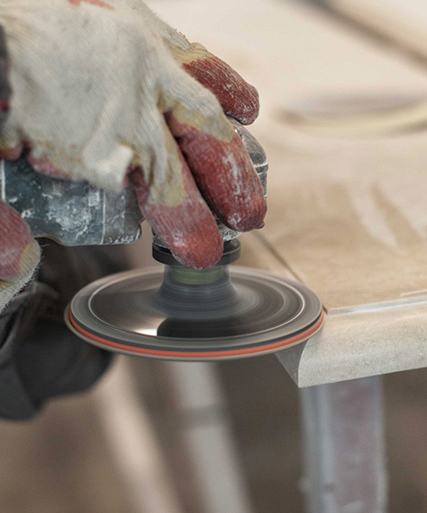
Deburring does not always require aggressive material removal. Small burrs around cut edges can often be treated with a wire wheel that provides controlled brushing rather than heavy grinding.
- Thin wire: Provides greater flexibility and can suit lighter cleaning and finishing.
- Medium wire: Offers a balance between cleaning action and surface conformity.
- Thicker wire: Provides stronger impact against stubborn scale, weld residue, and heavy burrs.
Product construction illustrates this difference. Makita lists a 4-inch knot-twist wire wheel using 0.020-inch carbon-steel wire, with a 1/2-inch face width and a maximum speed of 13,500 RPM on its M10 × 1.25 version.
Such specifications are not simply dimensional details. Wire thickness and knot construction affect how strongly the bristles contact the workpiece, making these parameters relevant to the intended application.
Knotted or Crimped: The Surface Dictates the Choice
Two wire wheels with the same diameter can produce noticeably different results because their bristles are constructed differently.
| Wire Construction | Typical Application | Surface Behavior |
|---|---|---|
| Crimped Wire | Light rust, cleaning, deburring | More flexible |
| Knotted Wire | Weld scale, heavy rust, weld spatter | More aggressive |
| Fine Wire | Surface preparation, light finishing | Lower impact |
| Thick Wire | Heavy contamination and weld residue | Higher brushing force |
Hilti similarly distinguishes between knotted wires for faster, coarser material removal and crimped wires for finer surface finishing.
Weld Cleaning Needs a More Focused Brush
Weld seams often contain spatter, oxide layers, and residual scale that are difficult to remove with a flexible light-duty brush. Knotted wheels can provide concentrated contact around the weld bead and adjacent areas.
- Weld spatter: Knotted wire can provide concentrated mechanical cleaning.
- Weld scale: Stiffer wire construction is suited to heavier residue.
- Pipe welds: Narrow-face stringer wheels can reach weld profiles and corners.
- Weld blending: Crimped products can provide a less aggressive brushing action after heavy residue has been removed.
Bosch describes carbon-steel knotted wire wheels as suitable for bead-weld preparation and difficult brushing applications, including tight spaces.
Surface Finishing Does Not Mean Grinding
Wire brushing can also prepare a surface before coating, welding, or further fabrication. The objective is usually to remove contaminants or lightly condition the surface rather than substantially reshape the metal.
Crimped wire products are particularly useful across irregular surfaces because their flexible bristles can follow contours. Tanis Brush lists crimped carbon-steel wheel brushes for light-to-medium deburring, descaling, rust removal, surface cleaning, and shaped or grooved workpieces.
Surface Condition and Desired Result
- Before painting: Remove loose rust, scale, and coating residue.
- Before welding: Clean contamination and oxide from the joining area.
- After cutting: Brush away small burrs and loose particles.
- After welding: Remove spatter and surface residue around the weld.
Steel Wire or Stainless Wire?
Wire material matters as much as wire construction. Carbon-steel bristles are widely used on ordinary steel and other ferrous materials. Stainless-steel wire is more appropriate for stainless steel and certain non-ferrous metals where cross-contamination is a concern.
Norton lists stainless-steel filament products for aluminum, brass, copper, stainless steel, and other applications. Using an unsuitable carbon-steel brush on corrosion-sensitive stainless surfaces can leave steel particles behind and create later discoloration or corrosion concerns.
RPM Is a Product Specification, Not Just a Machine Setting
Wire wheels operate at high rotational speeds, making the rated RPM an important product parameter. Wheel diameter, wire construction, arbor type, and maximum operating speed should correspond with the angle grinder.
- 4-inch knot-twist wheel: Makita lists a 12,500 RPM maximum on its 5/8"-11 version.
- 4-inch M10 × 1.25 wheel: Makita lists a 13,500 RPM maximum.
- 5-inch stringer wheel: Product specifications can vary according to wire construction and design.
The grinder should never exceed the wheel's marked maximum operating speed. Correct arbor compatibility and suitable guarding are also essential during operation.
Where Does a Steel Wire Wheel Fit?
A steel wire grinding wheel is better viewed as a surface-cleaning and preparation accessory than a replacement for a bonded grinding wheel. It can remove rust, scale, paint residue, weld spatter, and burrs while offering a different surface interaction from abrasive grains.
- Cleaning: Crimped wheels suit lighter contamination, while knotted designs handle heavier residue.
- Deburring: Wire diameter and flexibility influence control around edges.
- Weld preparation: Knotted wheels provide concentrated brushing action around weld seams.
- Surface finishing: Finer or crimped wire products can provide gentler conditioning.
Matching wire construction, filament material, diameter, wheel profile, and RPM with the actual workpiece gives users a clearer way to approach wire-brush applications. Rather than treating every steel wire grinding wheel as a general-purpose accessory, the brush design can be matched to the contamination, surface geometry, and desired finish.

Quick Links
 Home
Home
About us
 +86-13967457388/ +86-0579-87320615
 No. 49, Weitai Road, Phase II, Zhiying, Yongkang, Jinhua City, Zhejiang, China
Copyright © 2024. YONGKANG ZHENGBO ABRASIVES CO., LTD. All rights reserved.
Aluminum Grinder Blade Factory
