


 Eng

 عربى


Steel Cutting Discs: What Affects the Total Cost per Cut
 2026.10.23
 Industry News
Industrial buyers need to evaluate more than unit prices before ordering abrasive cutting products. Disc dimensions, abrasive composition, machine compatibility, and safety markings all influence whether a product fits the intended metalworking process. At Zhengbo, we recommend confirming these details before requesting samples or approving a bulk order. A clearly defined specification also helps purchasing teams compare supplier quotations and reduce misunderstandings during production.
Our approach to steel cutting discs for angle grinder begins with the workpiece and the equipment used to process it. Establishing these requirements early gives buyers a practical basis for evaluating product suitability and supplier quality controls.
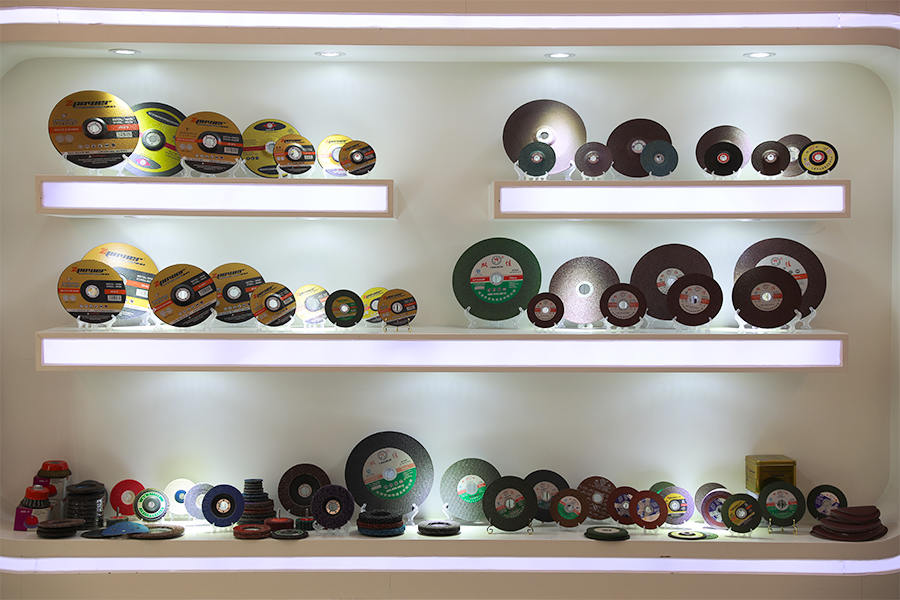
1. Confirm the Workpiece Material and Cutting Application
Different metals place different demands on an abrasive disc. Carbon steel, stainless steel, steel tubing, and structural profiles may require different abrasive formulations and disc thicknesses. Buyers should identify the material grade, workpiece dimensions, and expected cutting conditions before confirming a product code.
- Carbon steel: Confirm the section thickness and cutting frequency to determine a suitable disc specification.
- Stainless steel: Verify that the disc is explicitly suitable for stainless steel and meets relevant contamination-control requirements.
- Metal tubing and profiles: Consider wall thickness, cross-sectional shape, and access to the cutting line.
- Solid steel bars: Check the bar diameter, material characteristics, grinder capacity, and suitability of the disc for the intended cut.
Providing this information helps us discuss product specifications with greater accuracy instead of relying on a general description such as heavy-duty metal cutting.
2. Check Diameter, Thickness, and Bore Size
Disc dimensions determine whether an accessory fits the angle grinder and suits the intended cutting task. The three principal measurements are outside diameter, disc thickness, and bore diameter.
- Diameter: Common handheld grinder sizes include 115 mm, 125 mm, 180 mm, and 230 mm. The permitted size depends on the machine design and guard.
- Thickness: Thin discs, such as 1.0–1.6 mm versions, may suit sheet metal and thin-wall tubing. Thicker discs may be appropriate for other cutting conditions, subject to the manufacturer's specifications.
- Bore: A 22.23 mm bore is common on many angle grinder cutting discs, but buyers must verify the exact spindle and mounting requirements of their equipment.
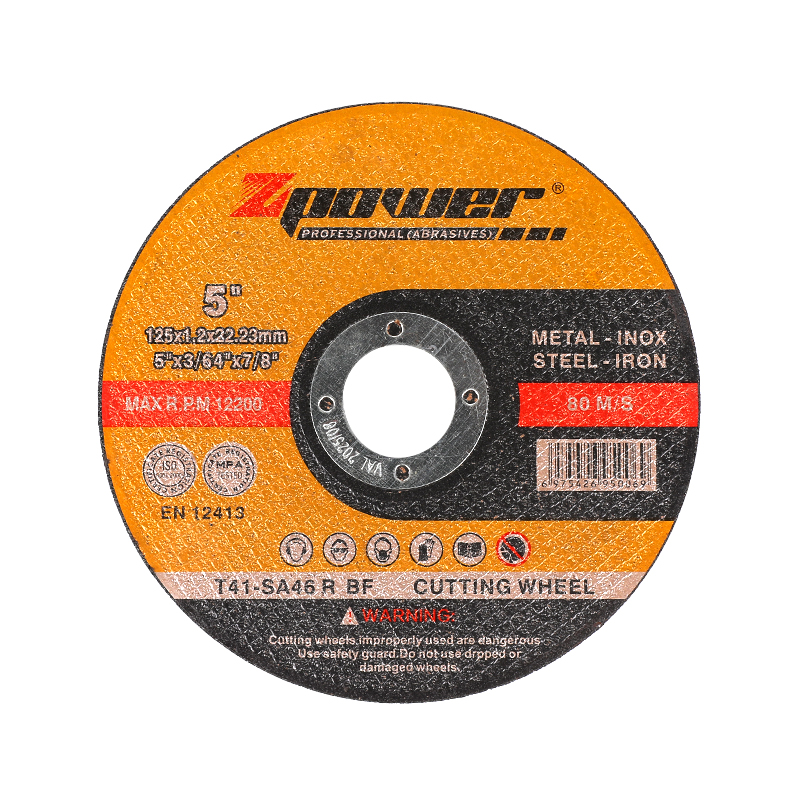
For example, a 125 × 1.2 × 22.23 mm disc indicates a nominal diameter of 125 mm, a thickness of 1.2 mm, and a bore of 22.23 mm. This is an illustrative specification, not a universal recommendation. Buyers should confirm the required dimensions against the grinder manual and intended application.
3. Verify Abrasive Type and Disc Construction
The abrasive grain and bonding system affect how a cutting disc interacts with metal. Aluminum oxide is commonly used for general steel applications, while other abrasive formulations may suit specific materials or operating requirements.
Buyers should also confirm the disc's construction and intended use. Reinforcement, bonding consistency, and the specified wheel type are relevant to product integrity. A cutting disc must not be treated as a substitute for a grinding wheel simply because both accessories fit an angle grinder.
At Zhengbo, we recommend documenting the following details in purchasing specifications:
- Abrasive grain type and intended workpiece material.
- Disc shape, construction, and reinforcement requirements.
- Applicable product standard and required safety documentation.
- Label information, packaging requirements, and product identification.
4. Check Rated Speed and Safety Markings
Speed compatibility is an essential purchasing consideration. The maximum operating speed marked on the disc must be equal to or greater than the angle grinder's rated no-load speed. Buyers must never exceed the disc's specified speed limit or install a disc larger than the tool permits.
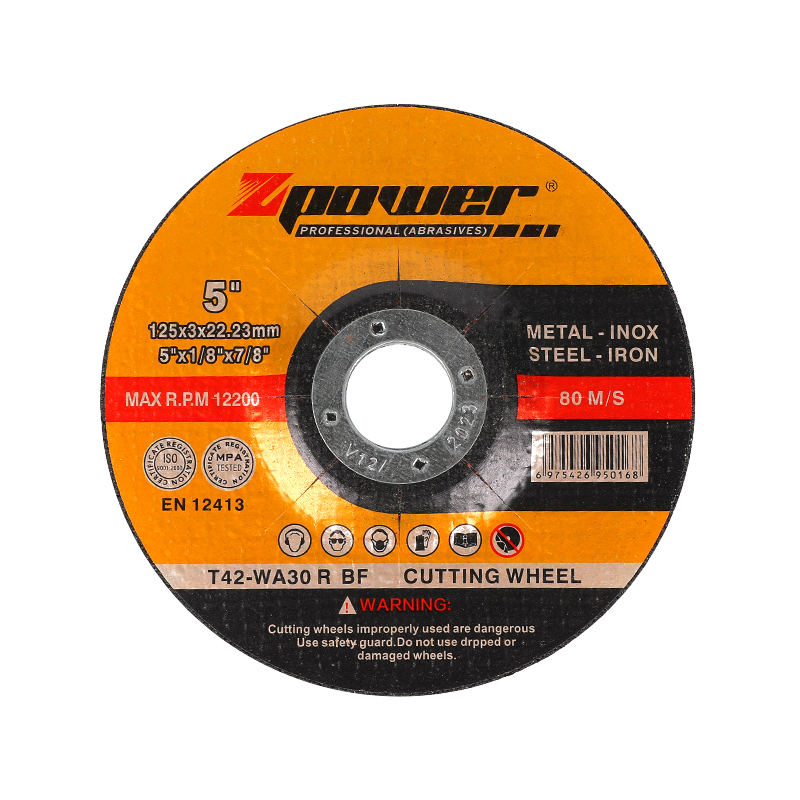
Before approving a product, confirm that the label provides the required information, including disc dimensions, maximum operating speed, intended application, and applicable safety markings. Relevant standards may include EN 12413 for bonded abrasive products, depending on the product and destination market.
Suppliers should be able to clarify which compliance documents and inspection records apply to the quoted product. Buyers should verify that the documentation covers the relevant product category and requirements rather than assuming that a general certificate covers every specification.
5. Evaluate Samples and Supplier Quality Controls
Sample testing helps buyers determine whether a proposed disc meets the requirements of an actual cutting process. A useful trial should employ representative workpieces, compatible equipment, and consistent operating conditions.
- Check dimensions and visible defects before use.
- Assess cutting behavior under the manufacturer's recommended operating conditions.
- Record relevant observations, including cut quality, wear, and workpiece condition.
- Compare results against agreed acceptance criteria rather than subjective impressions alone.
- Ask about batch identification, production inspection, and procedures for handling nonconforming products.
Sample approval cannot guarantee identical results in every production environment, but documented testing provides a useful reference for evaluating future orders. Buyers should also clarify packaging, labeling, and any inspection requirements before confirming production.
6. How Zhengbo Supports Clearer Purchasing Decisions
At Zhengbo, we believe that a well-prepared purchase specification makes communication between buyers and suppliers more precise. Workpiece details, disc dimensions, abrasive requirements, speed ratings, and quality documentation should all be addressed before an order is finalized.
Our recommended process is to define the application, confirm machine compatibility, review the proposed technical specifications, and evaluate samples where appropriate. This approach helps procurement teams compare quotations based on relevant technical requirements rather than price alone.
Contact Zhengbo through cuttingdiscfactory.com to discuss your steel cutting disc requirements. By sharing your workpiece material, preferred dimensions, equipment specifications, and destination-market requirements, you can establish a clearer basis for product evaluation and purchasing.

Quick Links
 Home
About us
 +86-13967457388/ +86-0579-87320615

 No. 49, Weitai Road, Phase II, Zhiying, Yongkang, Jinhua City, Zhejiang, China

Copyright © 2024. YONGKANG ZHENGBO ABRASIVES CO., LTD. All rights reserved.
Aluminum Grinder Blade Factory
