


 Eng
Eng 
 عربى
عربى

Is an Alumina Grinding Wheel the Key to Consistent Surface Finishes?
 2026.03.25
 Industry News
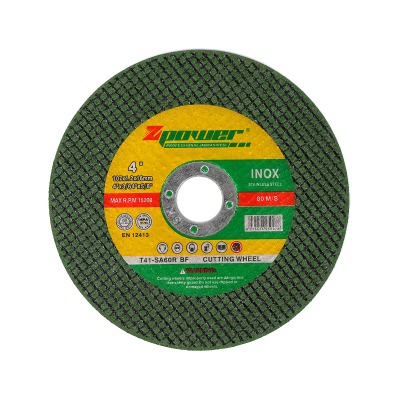
In modern workshops, efficiency and precision often depend on tools that quietly maintain performance without drawing attention. Among these tools, the Alumina Grinding Wheel has become a staple for metalworkers, machinists, and maintenance teams. Known for its durability and abrasive capabilities, it handles a range of materials from steel to cast iron with surprising consistency. But what makes it indispensable in many grinding applications?
At its core, an Alumina Grinding Wheel is designed to remove material from a workpiece through abrasion. Its composition allows for consistent performance over extended periods, which is essential when surface quality and dimensional accuracy matter. Compared with other grinding wheels, alumina-based options maintain their shape longer, reducing the need for frequent dressing and ensuring uniform cutting.
This stability is especially important for workshops that handle repetitive tasks or produce components requiring tight tolerances. Even slight variations in grinding can affect assembly fits or the durability of finished parts. The wheel's structure helps mitigate these risks.
Versatility Across Materials
One reason the Alumina Grinding Wheel is widely used is its adaptability. It can grind carbon steel, alloy steel, and even some stainless steel with minimal heat buildup. The wheel's abrasive nature allows it to remove material efficiently without creating micro-cracks or excessive burrs, which can compromise the workpiece.
For operations that handle mixed production runs, this versatility is invaluable. A single type of wheel can accommodate multiple applications, simplifying inventory management and reducing downtime for tool changes.
Improving Surface Quality
Surface finish is often a critical requirement in mechanical and industrial components. A well-maintained Alumina Grinding Wheel produces smooth and uniform surfaces, reducing the need for secondary finishing operations.
The wheel's grit size, bond type, and structure determine how aggressively it removes material and how fine the final finish will be. Choosing the right wheel for a specific task allows operators to balance material removal speed with surface precision. Over time, this attention to detail contributes to product consistency and overall quality control.
Maintenance and Longevity
Frequent wheel dressing can interrupt workflow and increase costs. Alumina Grinding Wheels generally maintain their shape and cutting efficiency longer than many other abrasive types. This reduces the frequency of dressing while maintaining reliable performance.
Regular inspection remains important. Checking for cracks, glazing, or uneven wear ensures safe operation. Proper mounting and speed selection also prevent premature wear and potential accidents, allowing workshops to keep production running smoothly.
Supporting Productivity
By combining durability, versatility, and consistent performance, the Alumina Grinding Wheel contributes directly to workshop productivity. Operators spend less time adjusting or replacing wheels, and finished components meet quality standards with fewer reworks.
Additionally, its ability to handle repeated heavy-duty tasks without losing effectiveness makes it suitable for both small-scale workshops and larger industrial operations. In environments where downtime is costly, the stability of this grinding solution makes a noticeable difference.
Beyond the Workshop
While typically associated with metalworking, Alumina Grinding Wheels are also used in tool maintenance, sharpening, and even certain woodworking applications. Their role extends beyond simple material removal—they help preserve the tools themselves by maintaining sharp edges and consistent dimensions.
In a world where efficiency, precision, and safety are closely linked, the humble grinding wheel proves that small tools can have a significant impact. The Alumina Grinding Wheel, quietly rotating behind the scenes, is more than an abrasive—it is a cornerstone of reliable production.

Quick Links
 Home
Home
About us
 +86-13967457388/ +86-0579-87320615
 No. 49, Weitai Road, Phase II, Zhiying, Yongkang, Jinhua City, Zhejiang, China
Copyright © 2024. YONGKANG ZHENGBO ABRASIVES CO., LTD. All rights reserved.
Aluminum Grinder Blade Factory
